.png)
What Is Claret? A Guide From a Family Bordeaux Estate
Updated: 20 hours ago
Claret means red wine from Bordeaux. It is the traditional British name for the dry reds of the Bordeaux region, usually blends of Merlot and Cabernet, and it began as a word for the pale red wines shipped from Bordeaux to England in the Middle Ages. We make it ourselves: Château Méaume is a British family's estate on Bordeaux's Right Bank, and our Merlot-led Bordeaux Supérieur is claret in the classic sense.
What is claret wine?
Claret is red wine from Bordeaux. The name is not a grape or a style of winemaking, and a bottle labelled claret should always come from the Bordeaux region of France. According to Decanter, it is a registered traditional wine term tied to Bordeaux's protected designation of origin.
In practice, most claret is a blend. Cabernet Sauvignon and Merlot are the main grapes, with Cabernet Franc and a little Petit Verdot or Malbec in some wines. Which grape leads depends on where the vineyard is, and that is the single most useful thing to know when you choose one.
Why do the British call Bordeaux claret?
The word comes from the French clairet, which described the light, almost rosé-coloured reds Bordeaux made centuries ago. In the 12th century, Eleanor of Aquitaine married the future Henry II of England, and Bordeaux spent around three hundred years under the English crown, until the end of the Hundred Years' War. Wine was one of its most important exports, and much of it went to England.
The wines grew darker and fuller over the centuries, but the British kept the name. Wine Spectator calls it a "rather old-fashioned name that British wine lovers gave to the red wines from Bordeaux", and it has never gone away. Walk into a British wine merchant, a club dining room or a Sunday lunch and you will still hear it.
What does claret mean in America?
Most Americans call these wines red Bordeaux or Bordeaux blends, and you are more likely to see claret on a wine list in London than in New York. Where you do see the word in the United States, read the rest of the label. Under American labelling rules, claret is one of a handful of old European wine names that US producers were allowed to use alongside their own place of origin, so a California claret is a Bordeaux-style blend from California rather than wine from Bordeaux. Since a 2006 wine agreement between the US and the EU, only labels already in use before then can keep the name, and most American wineries now sell their Bordeaux-style blends as Meritage instead.
If you want claret in the original sense, look for Bordeaux on the label, or come and taste it where it is made. The fast train from Paris reaches Bordeaux in about two hours, and our farmhouse sits among the vines on the Right Bank, 25 minutes from Saint-Émilion.
What does claret taste like?
A good claret is dry, with dark fruit, fresh acidity and tannins that give it structure. The wine writer Steven Spurrier described classic claret in terms of elegance, "fragrance of bouquet" and "lift", which is a better description than any list of fruit.
Where the wine comes from changes the style. On the Left Bank, in the Médoc and Graves, Cabernet Sauvignon grown on gravel gives firmer, more structured wines that often need time. On the Right Bank, around Saint-Émilion and Pomerol, Merlot on clay and limestone gives rounder, softer wines that are often ready to enjoy sooner.
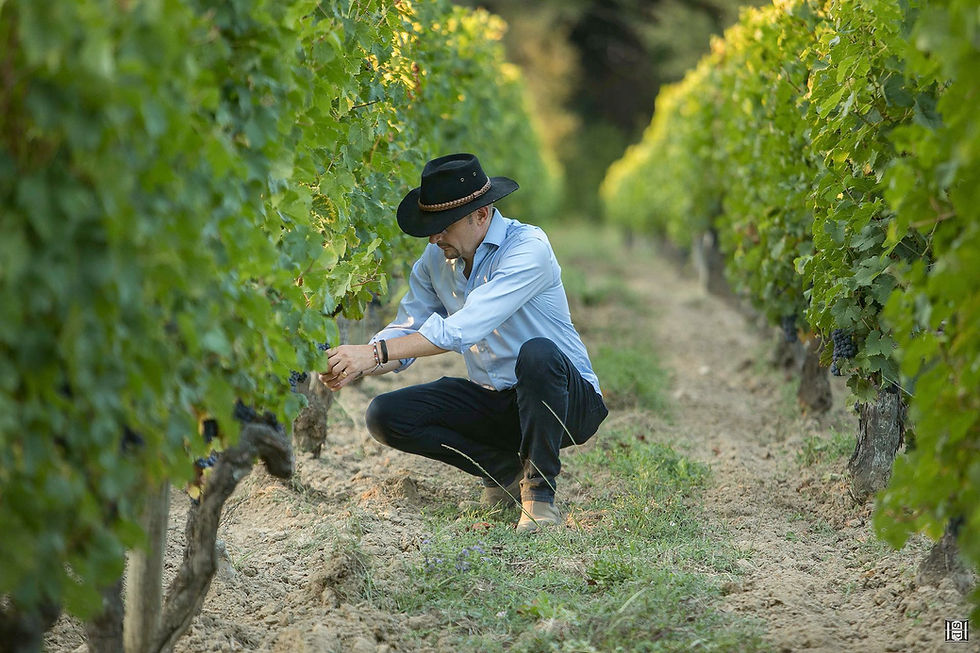
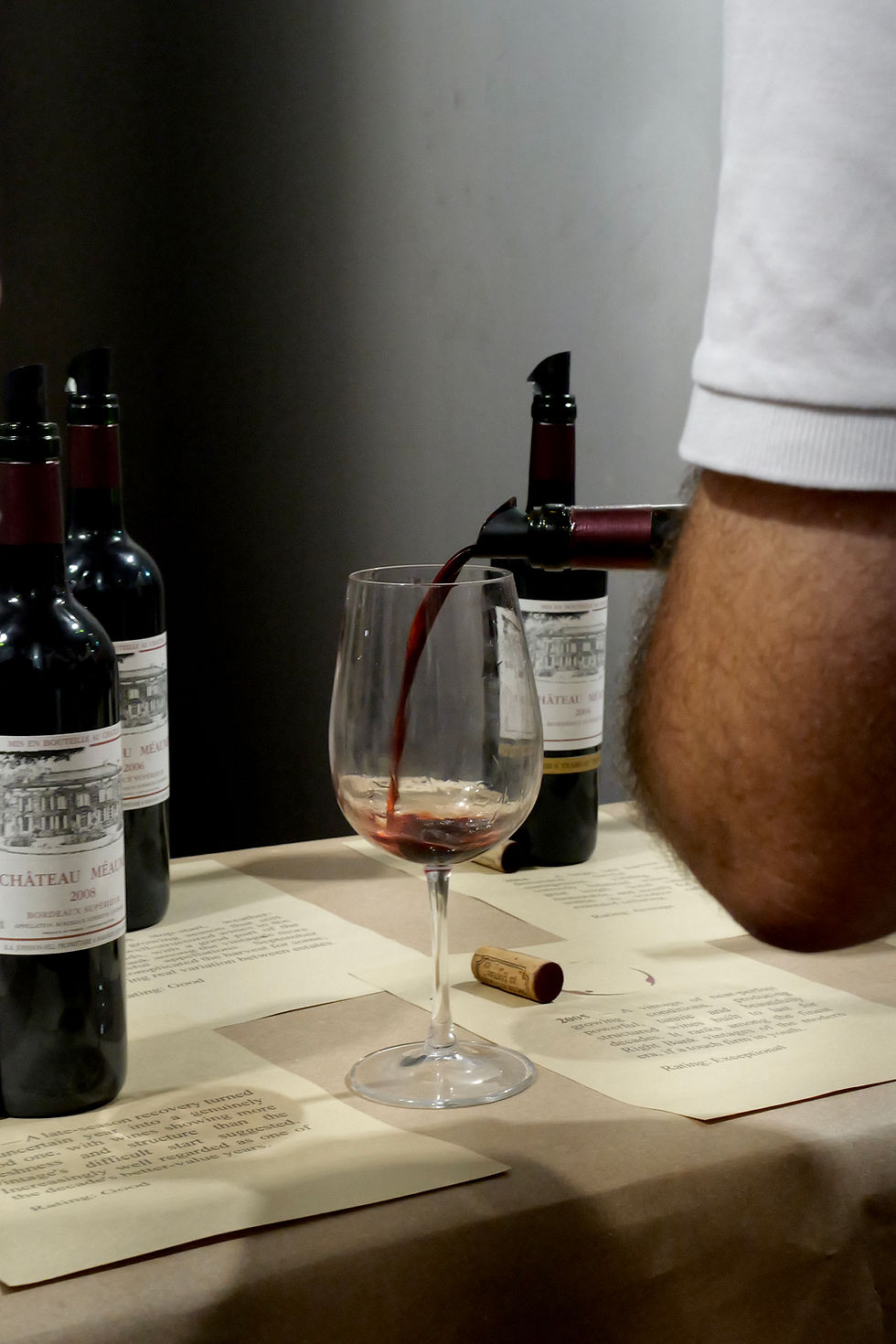
Ours is a Right Bank claret, made from 90% Merlot, 8% Cabernet Franc and 2% Cabernet Sauvignon grown on clay-limestone soils 15 minutes from Pomerol. Wild blueberries and baked cherries come first, then cedar and gentle spice from the oak. The Merlot gives velvety tannins and rich plum, the Cabernet Franc adds structure and a touch of herbaceousness, and the finish is long, with dark fruit.
How do you choose a good claret?
A bottle that simply says claret tells you very little, so look at the rest of the label. Bordeaux Supérieur is worth knowing about: it is still a Bordeaux appellation, but the rules call for lower yields, riper grapes and at least nine months of ageing for reds. The Bordeaux wine council is careful to say it is "no better than the Bordeaux PDO", only different, with more power and concentration.
Next, look for the name of a château and the words "mis en bouteille au château", which means the wine was bottled at the estate where it was grown. That tells you one grower is responsible for the wine from the vineyard to the bottle. Finally, check the vintage, because some years suit the Right Bank better than the Left and the reverse. Our guide to the best Bordeaux vintages covers which years stood out when we opened sixty in a row.
What food goes with claret?
Claret is made for the table. A proper claret with Sunday lunch is a British tradition for good reason: the tannins and acidity cut through roast beef, lamb and rich gravy in a way few other wines can. At home we reach for ours with roast beef, beef bourguignon, slow-cooked casseroles and mushroom risotto, and for special occasions with rack of lamb or côte de boeuf. It is also very good with mature Comté or Saint-Nectaire.
To get the best from a bottle, decant it for 30 to 60 minutes and serve it at 16 to 18°C in a large glass. Younger vintages suit lighter dishes, while older ones have the depth for richer food.
A claret for Sunday lunch since 1986
Our favourite proof that claret belongs at the Sunday table came in the post. In December 1986, Roald Dahl wrote to Alan and Mrs Johnson-Hill from Gipsy House in Great Missenden. He had a cellar of around 600 cases of claret beneath his house, and Château Méaume had earned its place in it. "I have kept a good stock of Méaume," he wrote. "It is always delicious." It was served, he said, every Sunday to "a large party of appreciative snooker players". You can read more about Roald Dahl's letter to Château Méaume.
Where can you stay on a Bordeaux vineyard and taste claret?
The best way to understand claret is to drink it where it is made. Our 18th century farmhouse on the vineyard sleeps up to ten, sits among the vines 25 minutes from Saint-Émilion and has a terrace made for long lunches, and every stay includes a session in our cellar, usually with the current vintage and something older if we have it open.
If you would rather start with a bottle at home, buying direct means the wine comes straight from the estate where it was grown, made and aged, rather than through a chain of merchants. The current releases, the critics' scores and how to order are on our Right Bank Bordeaux wines page, and we deliver across the UK and Europe.
Quick answers
What does claret mean? Claret means red wine from Bordeaux. It is the British name for it, taken from the French clairet.
Is claret the same as Bordeaux? Claret means red Bordeaux. Bordeaux also makes dry white wines and sweet wines such as Sauternes, which are not claret.
Is claret sweet or dry? Claret is a dry red wine.
What grapes are in claret? Mainly Merlot and Cabernet Sauvignon, often with Cabernet Franc and smaller amounts of Petit Verdot or Malbec. Right Bank clarets lean on Merlot, Left Bank clarets on Cabernet Sauvignon.
Is claret a good wine? It can be excellent or ordinary, like any wine. Look for a named château, estate bottling and a good vintage rather than the word claret alone.
What food goes with claret? Roast beef, lamb, duck, casseroles, mushroom dishes and hard cheeses such as Comté.
So what should you look for in a bottle of claret?
Claret is simply red Bordeaux with a very British name, and the name alone won't tell you much about what is in the glass. Choose by where it was grown, who made it and the year, and open it with a good Sunday lunch.
Claret makes more sense with the vines in view and the cellar a short walk away. Check dates and book the farmhouse, and the cellar session comes with your stay.