.png)
Where to Stay in the Bordeaux Wine Region: the City, Saint-Émilion or Among the Vines?
If wine is the reason for the trip, the best place to stay in the Bordeaux wine region is out among the vineyards rather than in the city. Bordeaux city suits a short break built around restaurants, museums and an organised tour or two. Saint-Émilion village puts you inside the most visited wine town on the Right Bank, though it is busy in summer and hard to fit a group into. A farmhouse or château on a working vineyard gives you space, quiet evenings and estates on your doorstep, with one condition: you will need a car.
How is the Bordeaux wine region laid out?
Bordeaux is a big region, and where you sleep decides which wines are easy to reach. The city sits on the Garonne in the middle. The Left Bank runs north-west from it through the Médoc, home of Margaux and Pauillac, and south through Graves and Sauternes. The Right Bank lies to the east around the Dordogne, taking in Saint-Émilion, Pomerol and smaller appellations such as Fronsac and Castillon. The two sides make different wine, Cabernet Sauvignon on gravel to the west and Merlot on clay and limestone to the east, and our guide to what claret is and how it tastes explains why that matters in the glass.
Distances look short on a map but add up on country roads. From our farmhouse on the Right Bank, Pomerol is 15 minutes away, Saint-Émilion 25, and Bordeaux city and the airport 40. Estates in the Médoc, such as those around Margaux, take 45 minutes to an hour. Covering both banks from one base is possible, but it means long drives on tasting days, so the most useful decision you can make early is which side of the river you most want to drink, and then to stay on that side.
Where you stay | Best for | To Saint-Émilion | To the Médoc | Car needed? |
Bordeaux city | Short breaks, travelling without a car | About 45 minutes | 40 minutes to an hour | No |
Saint-Émilion village | Couples, a few nights on the Right Bank | On the doorstep | Over an hour | For most visits |
A Right Bank vineyard, such as our farmhouse | Groups, longer stays, wine at the centre | 25 minutes | 45 to 60 minutes | Yes |
Should you stay in Bordeaux city?
Bordeaux city is the easiest base if your trip is short or you are arriving without a car. It is a handsome, walkable city with trams, very good restaurants and the Cité du Vin, the wine museum on the river. Organised day tours to the vineyards leave from the city, which suits anyone who would rather not drive, and the Bordeaux tourist office is a good place to compare them.
The trade-off is that the vineyards are always a drive away. Saint-Émilion is around 45 minutes east and the Médoc châteaux 40 minutes to an hour north, so every estate visit starts and ends in traffic, and the evenings are city evenings rather than vineyard ones. The city works well for two or three nights with a tour day in the middle, and less well for a week unless the city itself is the main draw.
What is it like to stay in Saint-Émilion?
Saint-Émilion is the village people picture when they think of Bordeaux wine country: steep limestone streets, a church carved into the rock and wine shops on every corner. The village and its vineyards are a UNESCO World Heritage site, and staying inside it means you can walk to dinner and reach several estates without moving the car. The Saturday morning market is worth planning around.
It is also small and popular. The streets are busy from late spring to early autumn, most places to stay are small hotels and guest rooms, and a group of eight or ten will struggle to stay under one roof. It suits a couple who want a few nights at the heart of the Right Bank and plan to eat out every evening.
Why stay on a working vineyard instead?
Staying on a working vineyard puts the wine at the centre of the holiday rather than at the end of a drive. You wake up with vines outside the window, walk the rows before breakfast and taste in the cellar where the wine was made, usually with the people who made it. For groups it also solves the room problem, because a whole farmhouse keeps everyone under one roof with a proper kitchen and a long table for dinner.
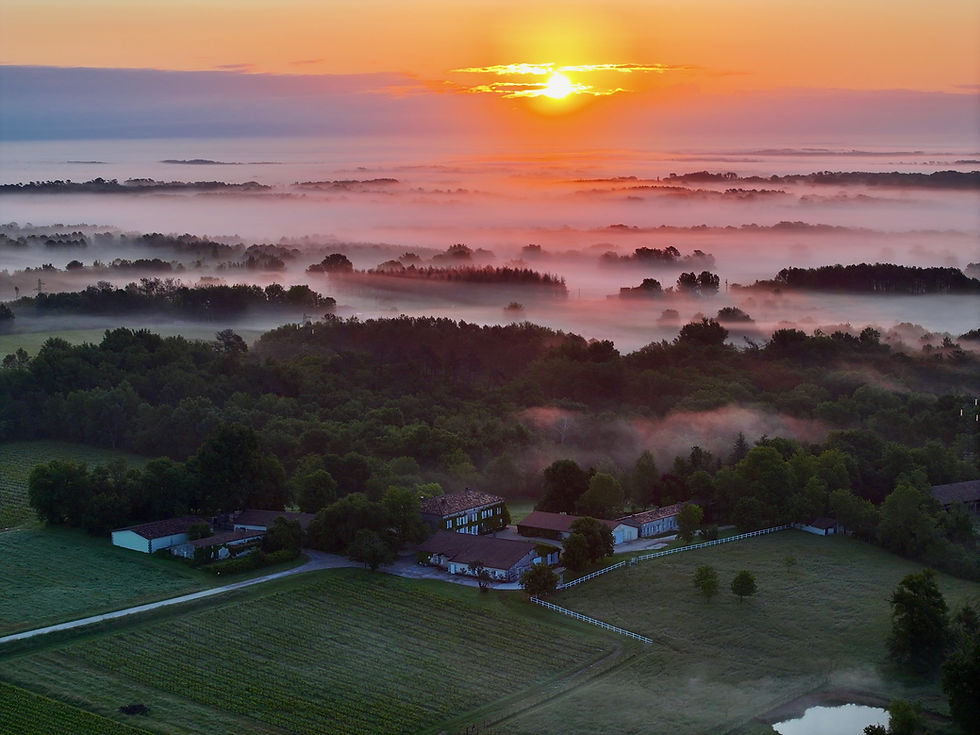
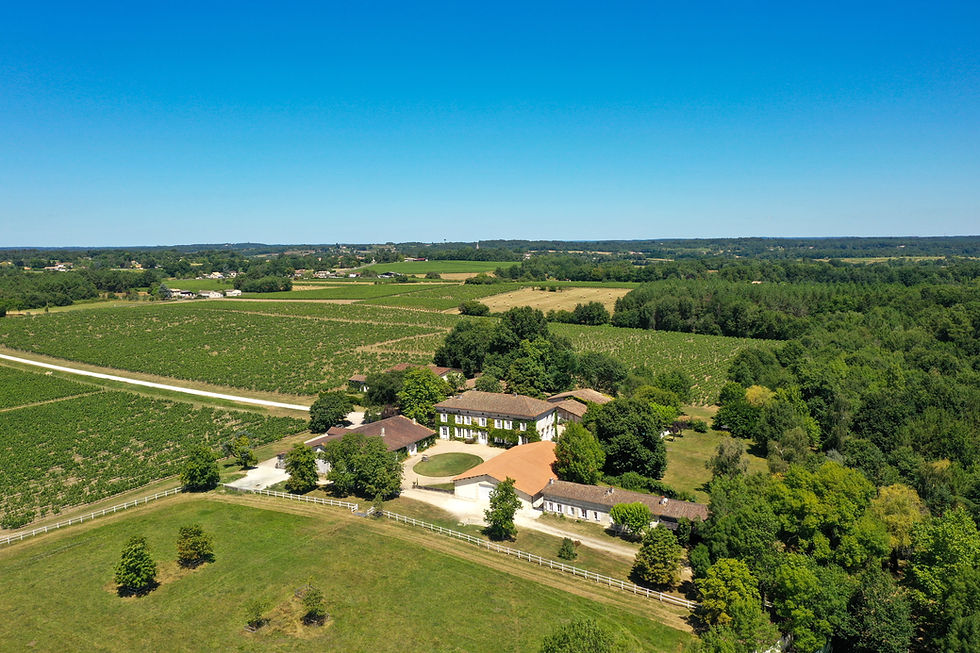
At Château Méaume that means our 18th century farmhouse on the estate, with four double bedrooms, three bathrooms and room for up to ten. Every stay includes a session in our cellar, usually with the current vintage and something older if Mark has it open. In late September guests see harvest happen around them, with tractors between the rows, picking teams in the parcels and the cellar smelling of fermentation, which we describe in more detail in our guide to a Bordeaux harvest holiday.
Most of our guests use the farmhouse as a base for visiting other estates. They can taste in Saint-Émilion or Pomerol all afternoon and be back on the terrace in under half an hour, and we are happy to suggest neighbours worth visiting. If you're still weighing a vineyard against a hotel, we've set out why staying on a working vineyard beats any Bordeaux hotel.
What are the downsides of staying among the vineyards?
The countryside asks a little more of you. You will need a car, because public transport does not reach most estates and taxis are scarce outside the city. Someone has to drive home after a tasting, and France's legal drink-drive limit of 0.5 grams per litre is lower than in England and Wales, so plan on spitting at tastings or taking turns behind the wheel.
Self-catering means shopping and cooking, which most groups end up enjoying, because the markets in Saint-Émilion on Saturday and Libourne on Sunday are far better than any supermarket. Many vineyard stays are also on working farms with machinery and livestock. Ours is one of them, with cattle in the pasture and tractors moving between the rows, so we don't accept guests under 17. If you want restaurants on the doorstep or a holiday without driving, the city or Saint-Émilion village will suit you better.
When is the best time to stay in Bordeaux wine country?
Late September and October bring the harvest, which is the most exciting time to be on an estate, although the exact start depends on the weather. Spring is green and quiet, with fewer visitors. July and August are warm and busy, and they need booking furthest ahead, which is why our minimum stay is five nights in July, August and harvest, and three nights for the rest of the year. Winter is the quietest season of all, and the wood burner in the farmhouse earns its keep after a day in cold stone cellars.
Where does Château Méaume fit?
If you are coming for the wine and travelling as a group, the farmhouse is the base we would choose ourselves: the whole house to yourselves on a working Right Bank vineyard, 15 minutes from Pomerol and 25 from Saint-Émilion, with a tasting in our cellar and wine at estate prices to take home. The details are on the page for our farmhouse on the vineyard. If you would rather start with a bottle, our Right Bank Bordeaux wines are made from the vines around the farmhouse.
Quick answers
Is it better to stay in Bordeaux city or Saint-Émilion for wine tasting? For Right Bank wine, stay in or near Saint-Émilion. Bordeaux city is better for a short trip without a car and organised tours.
Do you need a car to visit the Bordeaux vineyards? Yes, unless you join organised tours from the city. Most estates are not on public transport.
How far is Saint-Émilion from Bordeaux? Around 45 minutes by car from the city centre.
Can you stay on a vineyard in Bordeaux? Yes. Many estates have guest rooms or houses, and our farmhouse on the vineyard sleeps up to ten.
When is the best time to stay? Late September for the harvest, spring for quiet and green vineyards, and summer for warm evenings, booked well ahead.
So where should you stay?
Where you stay decides what kind of Bordeaux trip you have. Choose the city for a short break, Saint-Émilion village for a couple's few nights at the centre of the Right Bank, and a vineyard for a longer stay where the wine is part of every day. Whichever you pick, decide first which bank's wines you most want to drink, and stay on that side of the river.
If the Right Bank is your side of the river, the farmhouse sits among our vines and every stay includes a tasting in the cellar, usually with something older if Mark has it open. See the farmhouse and check dates.